GFR23 Thermal Test
Three bench tests measuring contact resistance, thermal conductivity and specific heat for the battery cooling simulation.
SAE23 ePowertrain (ME406) · Oregon State University
Advisors: Lisa Hildebrand (project) and Dr. Piacenza (faculty). I wrote all three reports.
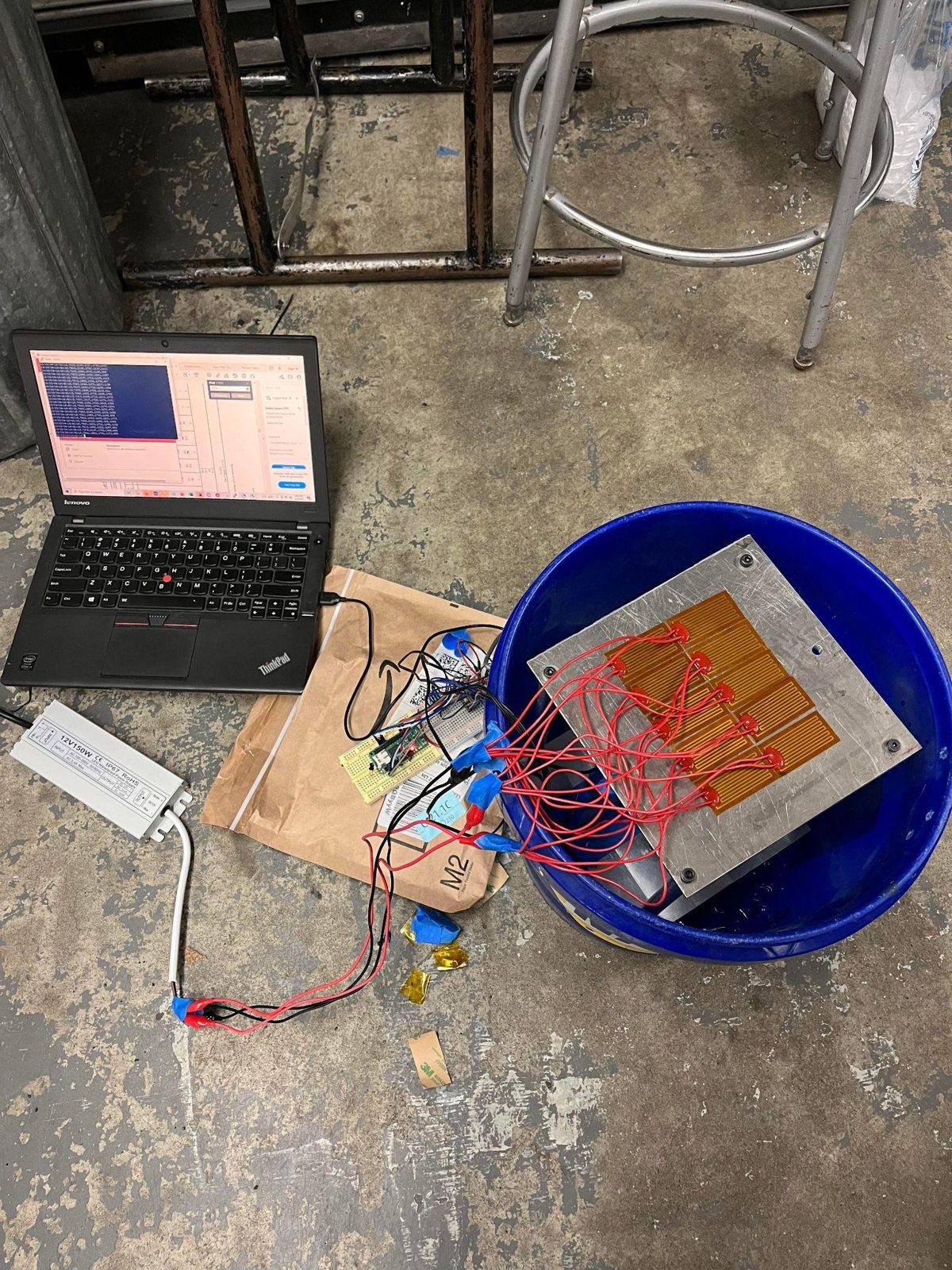
These tests supply real material values for the GFR23 accumulator cooling simulation. All three tests used 10K NTC thermistors and a data logger. The conductivity and contact-resistance rigs also used 7 W / 15 V heating plates (eight in total, 56 W), thermal paste, machined 6061 aluminum plates, and an ice-water bath as the heat sink.
Thermal conductivity (Tesla cell)
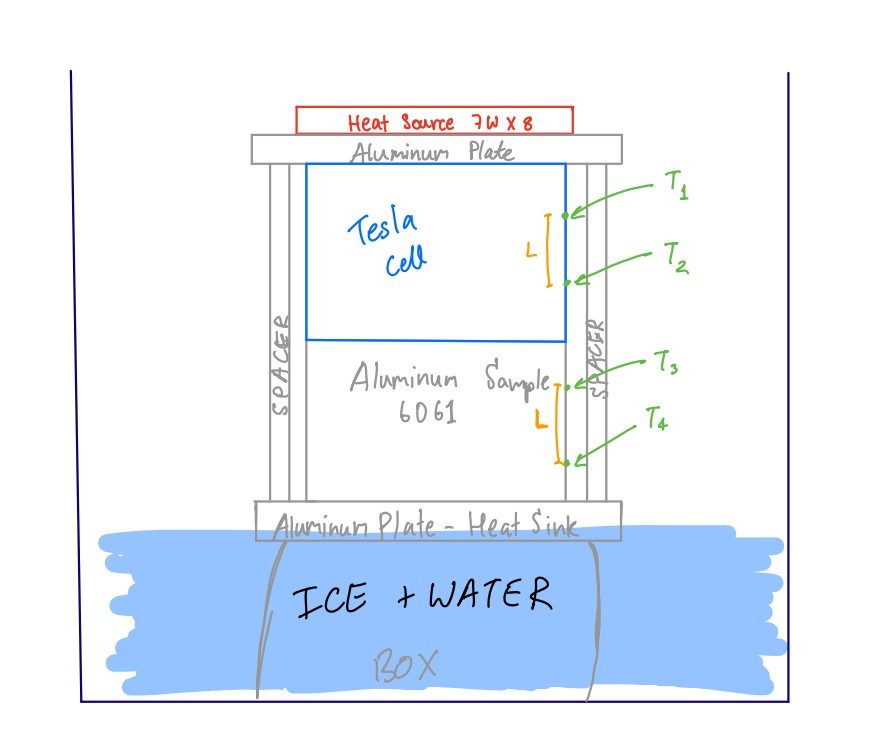
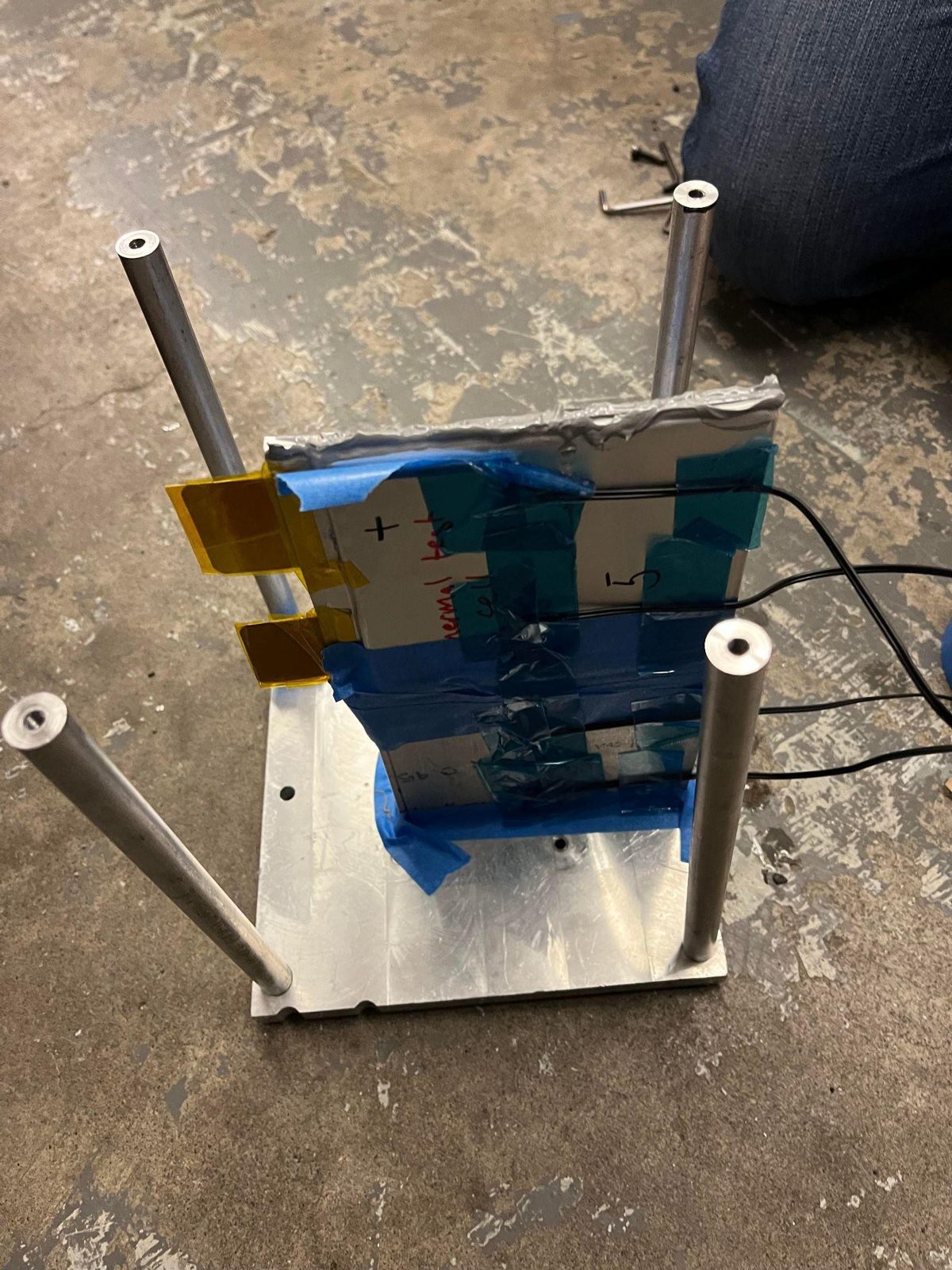
A heated aluminum plate on top, an ice-water heat sink below, and the cell sandwiched between, measured at steady state. I continued testing that Devin Pham started with the Melasta cell.
- Vertical test: about 90 W/m·K. This is the value the team expected to use.
- Horizontal test: about 134 W/m·K. Higher because the cell and sample were too thin to attach thermistors well, and the setup made it hard to keep surfaces in firm contact.
Specific heat (Melasta cell)
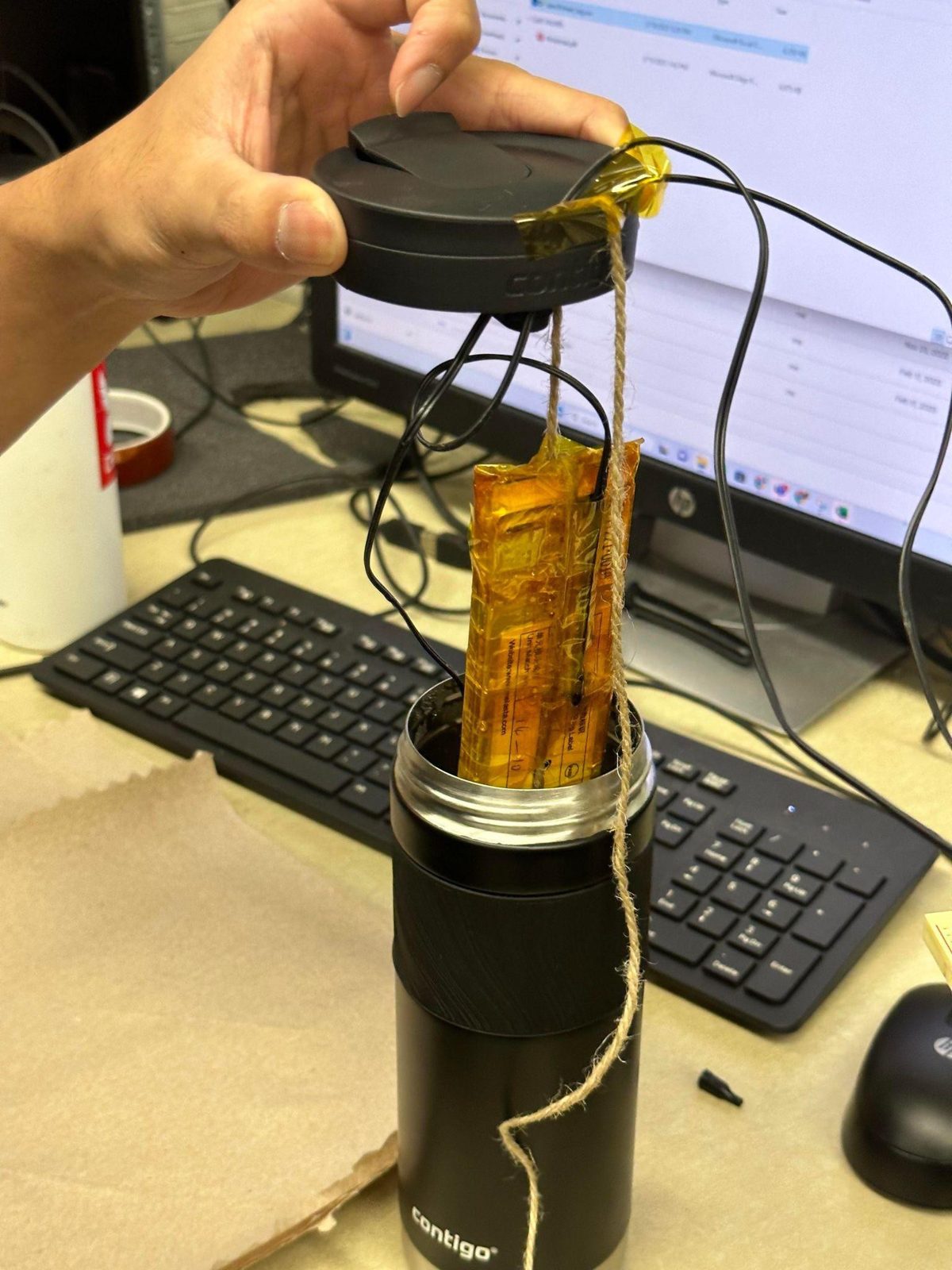
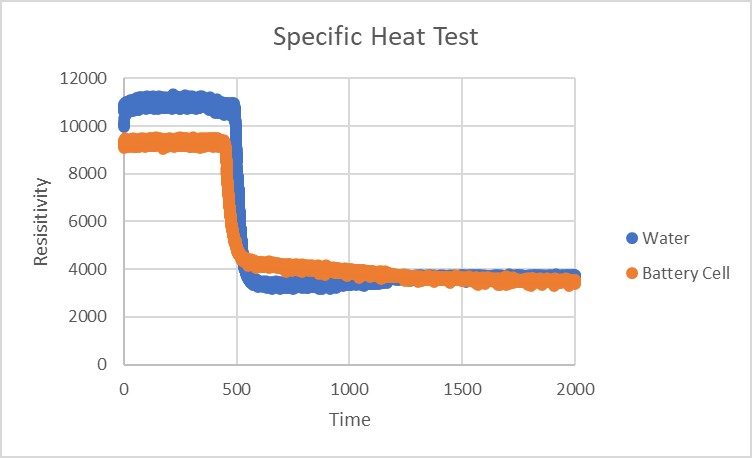
I heated deionized water to about 50 °C in an insulated container and measured how the temperature settled after submerging an unused cell with its tabs cut.
- Result: 0.5799 J/g·°C, so the cell heats about 7 times faster per gram than water (4.186 J/g·°C).
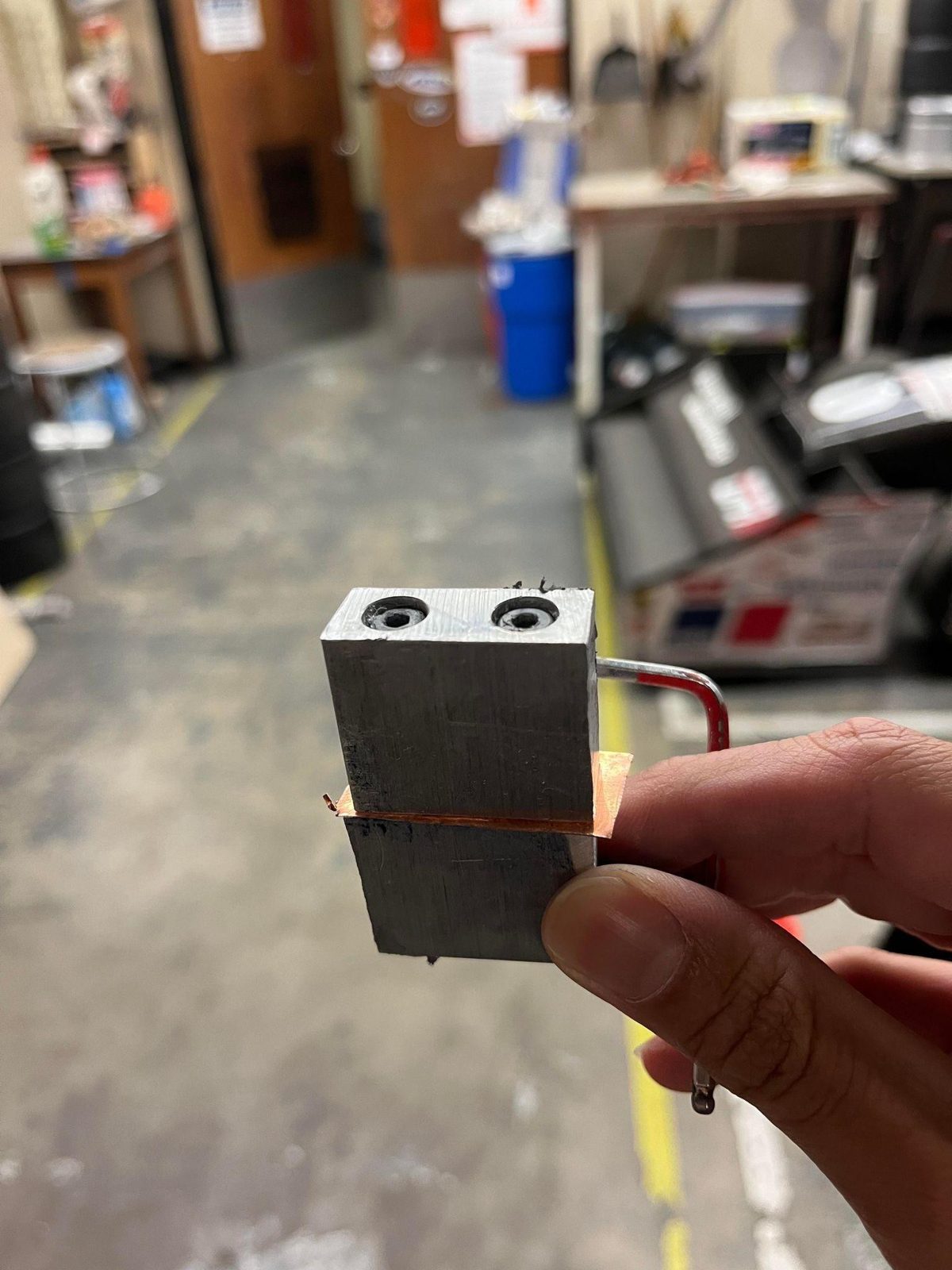
Thermal contact resistance (6061 aluminum to copper)
Aluminum blocks separated by a thin copper plate, with 56 W applied until steady state. The measured conductivity across the joint was very low because of heat loss at the contact area, and the report notes a possible error from a thermistor placed very close to the copper plate.