Thermal · Simulation · Testing
GFR23 Accumulator Cooling
The team's first ANSYS CFX thermal simulation of the 600V battery pack, with physical tests supplying real inputs.
Oregon State Global Formula Racing (Formula Student) · Capstone, project owner · Sep 2022 – Mar 2023
Problem
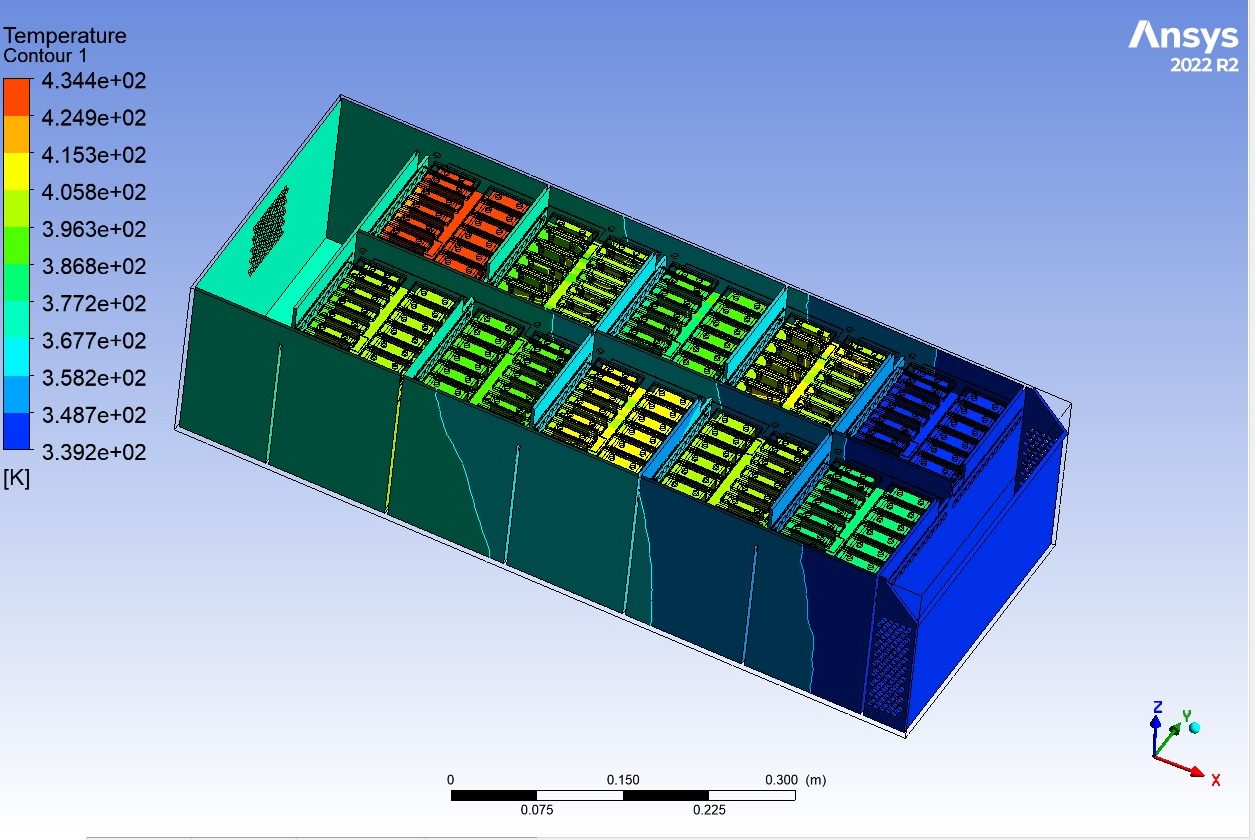
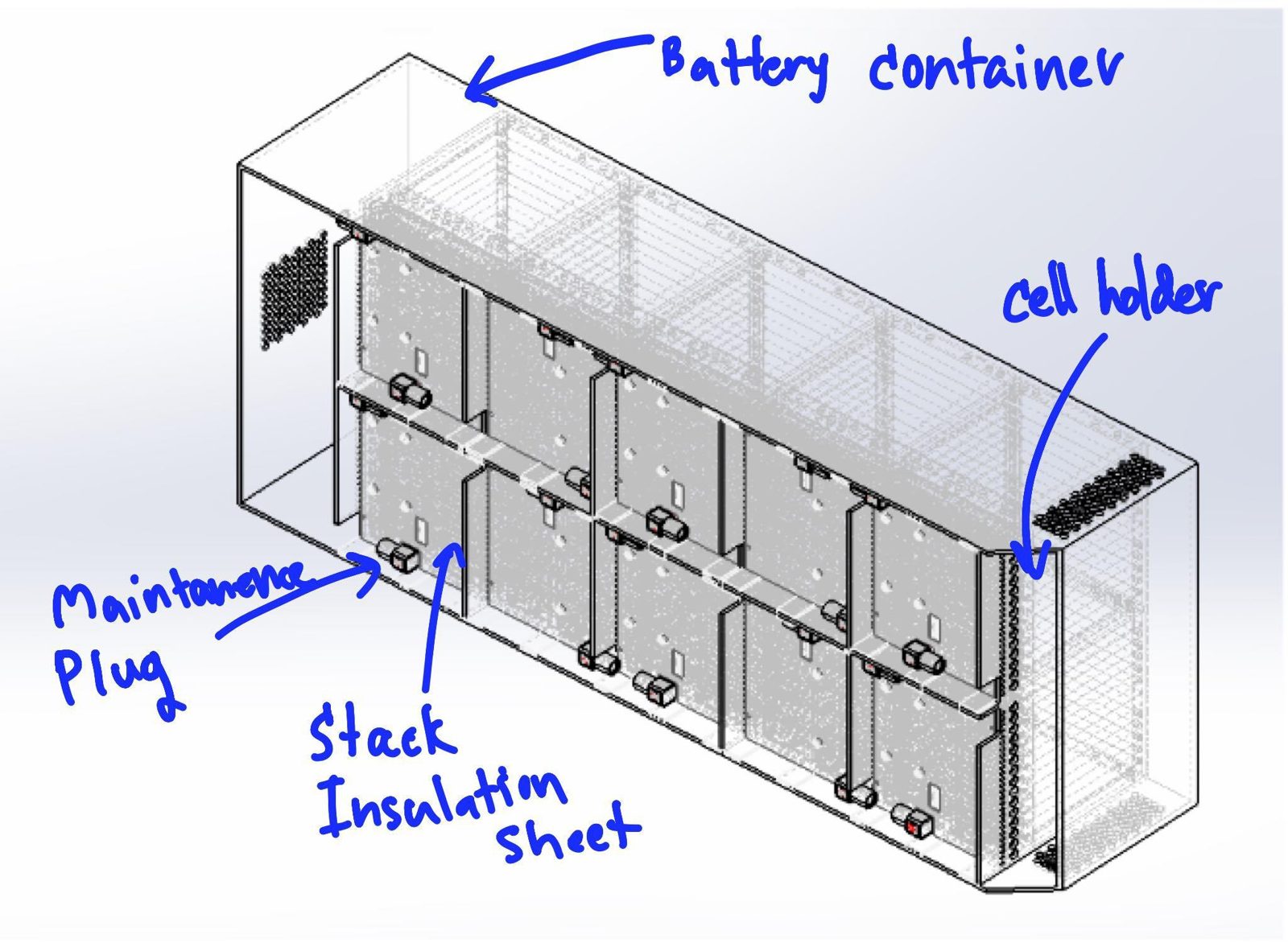
The GFR23 race car’s accumulator (battery container) needs enough cooling to stay within safe temperatures. The team needed a simulation that could predict the hottest areas so the cooling sub-team could design components to deal with them.
What I did
- Built the team’s first ANSYS CFX thermal simulation of the 600V battery pack, moving off the previous Star-CCM+ workflow, and wrote a setup tutorial so future members can run it.
- Simplified the model so it could run on the computing resources available: the battery container, six cell blocks (instead of individual cells), and the short and long busbars. A more detailed version with the cell holder was too heavy to run in the time available.
- Ran thermal conductivity, specific heat and contact resistance tests with thermistors and a data logger. See GFR23 Thermal Test.
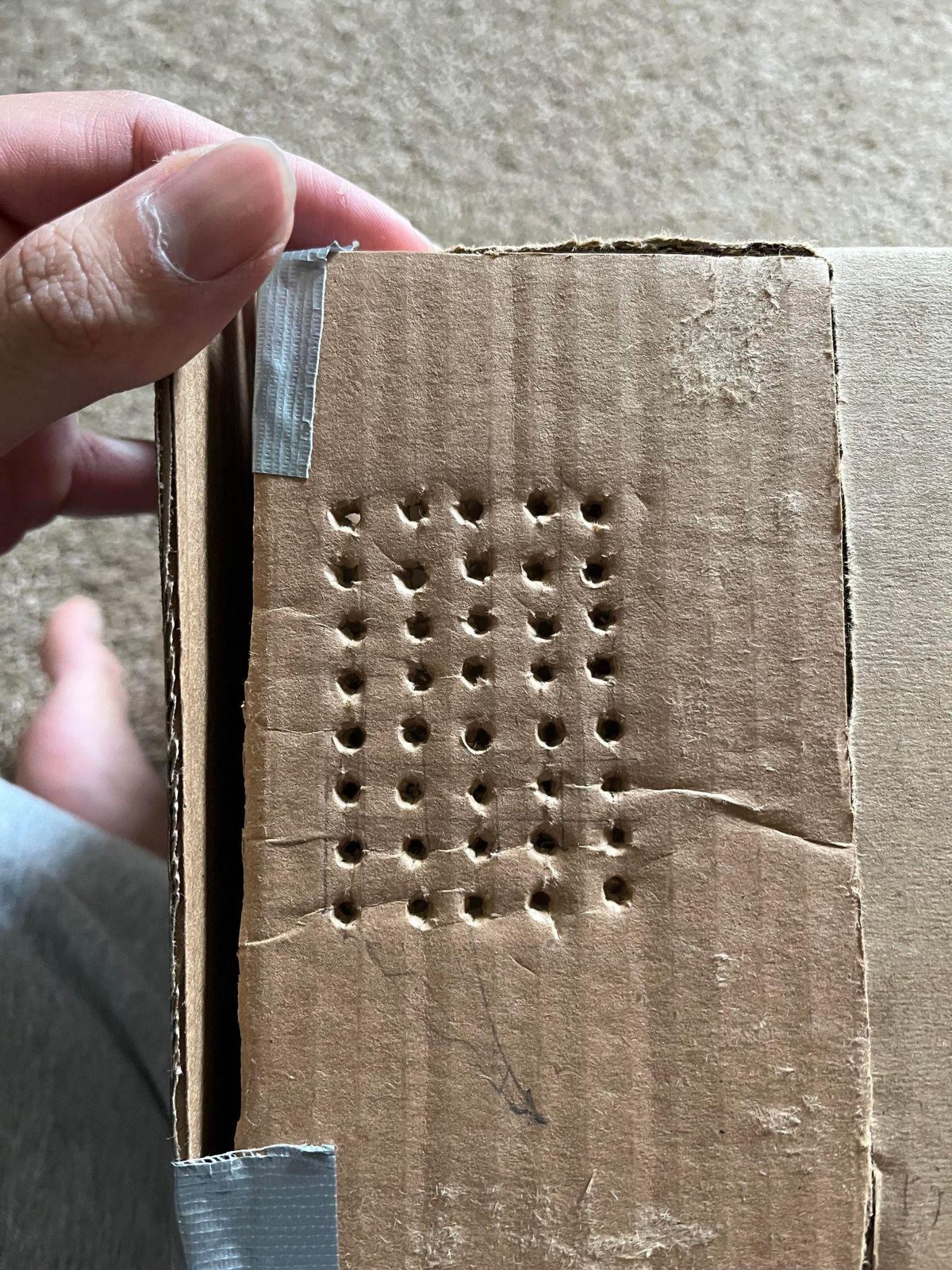
- Built a 1:1 cardboard airflow mock-up of the container with the car’s 48V fans and measured inlet airflow with an anemometer to get real inputs for the simulation.
- Compared three busbar concepts (finned heat sink, copper, 4 mm aluminum) using hand calculations, FMEA and CFD.
Result
The most successful simulation, run before the measured material values were added, predicted cell temperatures between 339 K and 434 K. It was the most realistic result the team had produced, and a first step for thermal simulation at GFR.
Tools: ANSYS CFX, SolidWorks, thermistors, data logger.