Imperial Bolt Saving Initiative
Cost-mitigation study after a ~$3M supplier price increase, with a plastic-pin concept worth up to ~$1.6M per year.
Facil, on site at Daimler Truck North America · Engineering lead
Problem
Facil sources and manages fastener suppliers for commercial trucks. Our bolt supplier announced a 25%+ price increase on all imperial bolts starting in 2026. That came to about $3M across 238 imperial bolt parts used by our largest customer, Daimler Truck North America (DTNA). My job was to find cost-mitigation ideas and help DTNA’s engineers adopt them. It was the first large project I led, about nine months after graduating.
Approach
My team suggested two directions: swap high-volume imperial parts for metric equivalents that aren’t affected by the increase, and introduce newer fastener technology that could replace current parts.
I started with the 5/8” bolt because it is interchangeable with M16 and has the highest volume. It covered 46 part numbers, each used in many applications. To make it manageable, I took the top 10 highest-usage part numbers and studied the top 10 applications for each. That made it easier to spot patterns across applications.
What I did
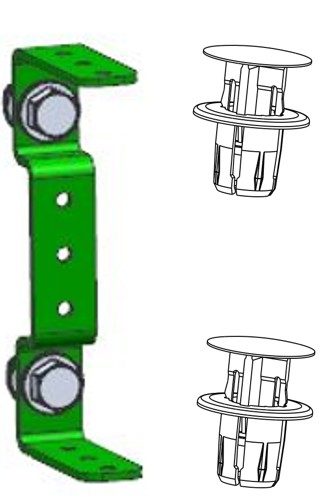
- Plastic pin concept. One application used millions of 5/8” bolts: steel brackets holding electrical, air and other lines throughout the truck. Each bracket used two 5/8” bolts rated for 1,000+ lb to hold about 10 lb of wiring. I flagged the joint as over-engineered and worked with Facil’s plastics expert on two options that keep the existing bracket: replace one bolt with an alignment pin (already used by Daimler Truck in Europe), or replace both with push pins.
- Business case. DTNA’s system had limited usage data, so I worked with DTNA’s fastener data engineers and cross-checked several data sets to estimate the real volume. The case showed about $800K potential savings per year with one pin, and up to about $1.6M with both.
- Presenting it. I presented to DTNA purchasing first. Their feedback was to frame the idea around engineering’s main goal, complexity reduction. I reworked the pitch and presented to the engineering teams and other stakeholders. The application owner called it a strong concept because it matched her goals. The project was ongoing, with an expected 2–3 years to implement.
- Imperial-to-metric testing. I directed A/B testing for 5/8” to M16 bolt replacements. I specified the test data and supplier requirements and coordinated the lab technician who ran the tests. The tests identified multiple parts that could potentially be replaced.
- AI-assisted screening. I used AI to screen about 1,000 parts in Excel against engineering rules, flagging any length difference over 5 mm. This cut the analysis from about 1.5 months to 2 weeks.
Result
Together, the concepts could offset about 50% of the 2026 price increase for DTNA while adding margin for Facil.
What I learned
Build the relationship with the application owner before proposing a part change. My first try was a lightweight-fastener idea. I got supplier quotes and samples and contacted three DTNA application owners, but only one replied and wasn’t interested. The pin concept only moved forward once I talked it through with the owner first. I also learned to frame engineering ideas in terms of the customer’s own goals.